
New technology platform combines automated fabric inspection and real-time quality intelligence to address inefficiencies across global textile supply chains.
Portuguese textile technology company Smartex.ai is stepping up its efforts to modernise textile and apparel manufacturing with the introduction of an integrated artificial intelligence (AI) platform, bringing together automated fabric inspection and digital supply chain intelligence. The company has also appointed technology entrepreneur Tony Fadell as its Chairman, adding considerable product innovation experience to its leadership.
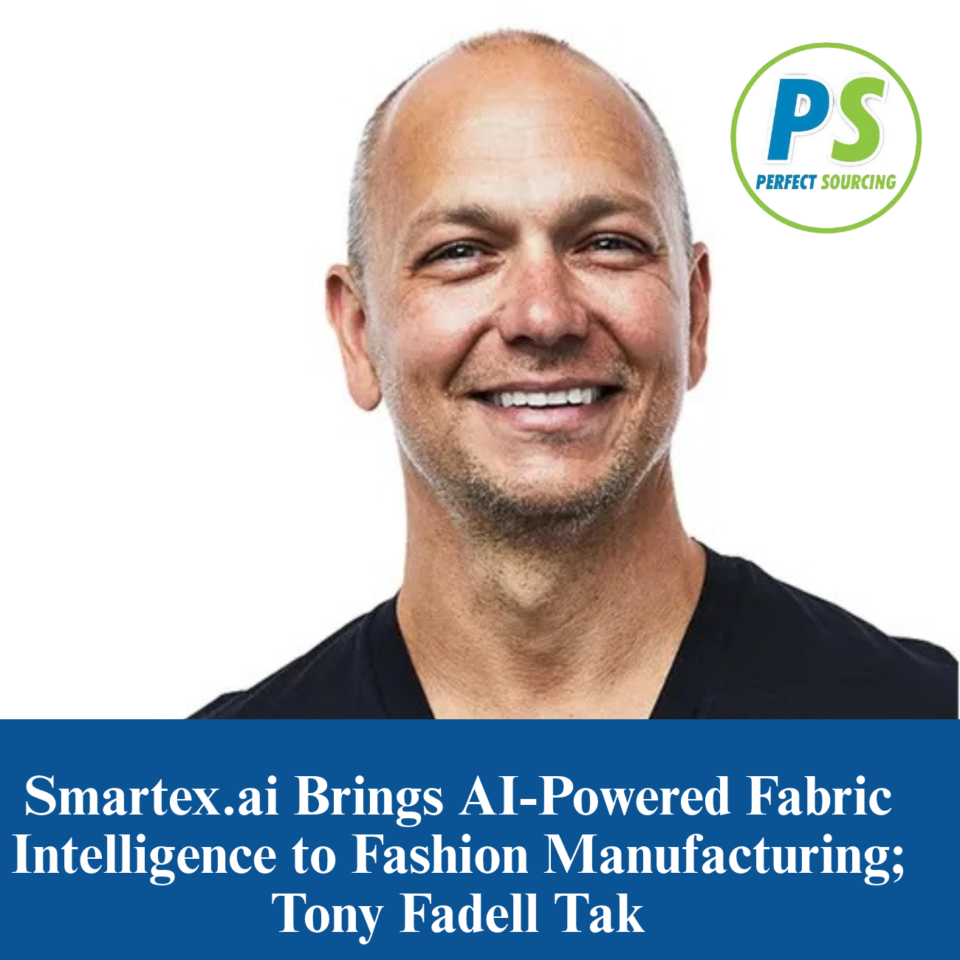
Fadell, widely recognised for his contribution to the development of Apple’s iPod and iPhone and as the founder of smart home technology company Nest, has been closely involved in designing the new technology ecosystem.
The initiative represents an attempt to address one of the apparel industry’s persistent operational challenges: the lack of accurate, timely information about fabric quality before materials enter garment production.
Two Technologies Designed to Transform Fabric Quality Management
The newly introduced ecosystem consists of two interconnected solutions, Smartex Inspect and Smartex IQ.
Smartex Inspect is a hardware-based inspection system that integrates cameras, sensors and AI capabilities into existing textile production machinery. Rather than requiring manufacturers to replace their equipment, the technology can be installed on machines already operating in textile mills.
It continuously captures and analyses fabric information during production, helping identify quality inconsistencies and potential defects across the material.
Complementing this hardware is Smartex IQ, a software platform that consolidates fabric inspection information into a shared digital environment. Textile mills, garment manufacturers and fashion brands can use the platform to access quality-related information and make more informed production and sourcing decisions.
The objective is to create greater transparency between different stages of the manufacturing process, allowing potential fabric-related problems to be identified before they disrupt garment production.
AI Model Built on 50 Billion Fabric Images
Smartex.ai says its technology is supported by eight years of in-house machine vision hardware development. The company has already deployed more than 800 systems across 10 countries.
Its artificial intelligence model has been trained using a database of 50 billion images of actual fabric captured on operational production lines.
This extensive training dataset is intended to help the system recognise fabric characteristics and quality variations under different manufacturing conditions.
For textile manufacturers, the technology could reduce dependence on conventional inspection processes while allowing existing quality teams to focus their attention on specific issues identified by the system.
For apparel brands and sourcing companies, access to fabric quality information before shipment could also improve supplier monitoring and reduce uncertainty during production planning.
Addressing the Hidden Financial Cost of Fabric Quality Issues
Fabric quality remains a major cost and efficiency concern for the global apparel industry. According to Smartex.ai, fabric represents approximately half of a garment’s production cost and contributes significantly to manufacturing delays.
In conventional supply chains, fabric-related defects or inconsistencies may only become evident when materials reach garment factories and are prepared for cutting. By this stage, shipments may already have travelled considerable distances, making corrective action expensive and time-consuming.
Max Easton, CEO of Smartex.ai, highlighted the financial implications of this information gap.
He explained that manufacturers frequently purchase around 5% additional fabric as a precaution because they cannot accurately predict the quality of incoming material.
For a supply chain purchasing $2 billion worth of fabric annually, this precautionary buffer represents approximately $100 million in additional expenditure.
According to Easton, better visibility into fabric quality before dispatch could potentially bring this additional requirement down to approximately 1%.
Such improvements could offer substantial benefits through reduced material wastage, lower inventory requirements and improved utilisation of manufacturing resources.
H&M Group’s Investment and Industry Collaboration
The development also has the backing of H&M Group, which has maintained a minority investment in Smartex.ai through its investment arm, H&M Group Ventures, since 2022.
Beyond its financial participation, H&M Group has helped connect the technology company with strategic manufacturing suppliers within its network. One of these suppliers also participated directly in developing the new product ecosystem.

Nanna Andersen, Managing Director at New Growth & Ventures, H&M Group, highlighted the importance of technology-led improvements in manufacturing visibility.
She said:
“We invested in Smartex.ai because they are solving a challenge for our industry, and we truly believe in the team. Their technology shows what becomes possible when greater intelligence and visibility are built directly into the supply chain: quality issues can be identified earlier, resources can be used more efficiently, and waste can be prevented before it happens. Smartex.ai is a strong example of how technology and AI can create both commercial value and more sustainable ways of operating. We’re excited to continue supporting the team as they develop and scale their solution across the industry.”
Tony Fadell Sees an Opportunity to Modernise Fashion Manufacturing
Fadell’s appointment reflects the company’s ambition to bring advanced technology and more sophisticated digital systems into an industry where several manufacturing processes continue to rely heavily on manual monitoring and conventional documentation.
Commenting on the state of the fashion manufacturing sector, Tony Fadell said:
“Chaos and waste is what I see when looking at the $4 trillion fashion manufacturing industry – it’s everywhere,” said Tony Fadell, Chairman of Smartex.ai. “‘Modern’ factories run on paper, not modern supply chain data, production and quality systems. Smartex is the start of a new era in fashion.”
His involvement combines experience in developing large-scale consumer technology products with Smartex.ai’s focus on applying artificial intelligence to physical manufacturing environments.
Hong Kong to Host the Industry Launch
Smartex.ai will introduce its new technology ecosystem to the industry at SmartCollab Hong Kong on November 27, 2026.
The company is also conducting private demonstrations in Hong Kong between November 19 and December 2, giving industry participants an opportunity to understand the capabilities of the new hardware and software solutions.
The launch comes at a time when fashion brands, textile manufacturers and sourcing organisations are increasingly exploring AI-driven manufacturing systems to improve productivity, quality assurance and supply chain transparency.
For the global textile and apparel sector, the bigger opportunity lies in moving from reactive quality inspection towards continuous monitoring and data-backed manufacturing decisions. Smartex.ai’s latest initiative seeks to make that transition possible by connecting fabric production, inspection and sourcing through a common digital intelligence platform.
